Refugee Farmers Provide Produce to the Community

This month, we’re highlighting a Partner Agency that’s both a grower and a distributor: CAC Beardsley Community Farm in Knox County. 


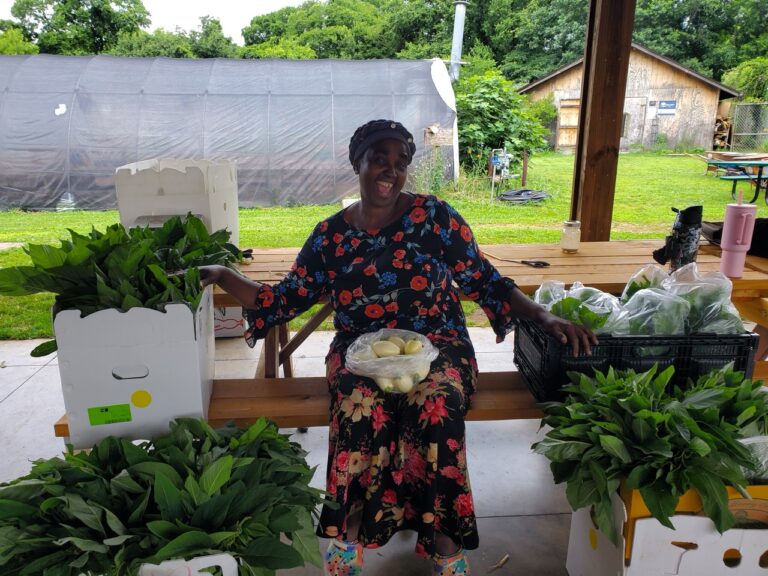
Their New Ground Gardens program, officially started in 2016, has made farmland accessible to 70 families just this year. Additionally, their Buy Back program grants opportunities for refugee farmers to sell their produce and give culturally-preferred foods back to the community. The food is purchased through one of our grants, and is provided to our neighbors in need at no cost to them. 


“They’ve sold $13,000 of produce so far,” said Charlotte, Director of Urban Agriculture for Beardsley Farm. “Josephine sold $1,000 worth of lenga-lenga today. It took us two hours to pack it all.” 


“It helps me buy stuff [for] my kids,” said Francine, one of the farmers. “It gives me more encouragement to keep going, to not just give up. You feel bad, your body doesn’t want to do [anything], but … it just gives you encouragement to keep going.” 


We’re so grateful for community partners like these for increasing access to both farmland and culturally-preferred foods in our region. Continue reading as we walk through the farm and gather enriching stories about the Buy Back program’s growing impact from both Charlotte and several of the farmers. 


The Tour 


First, Second Harvest was guided through the on-site farms — some of which are part of the Buy Back program for refugee farmers. 


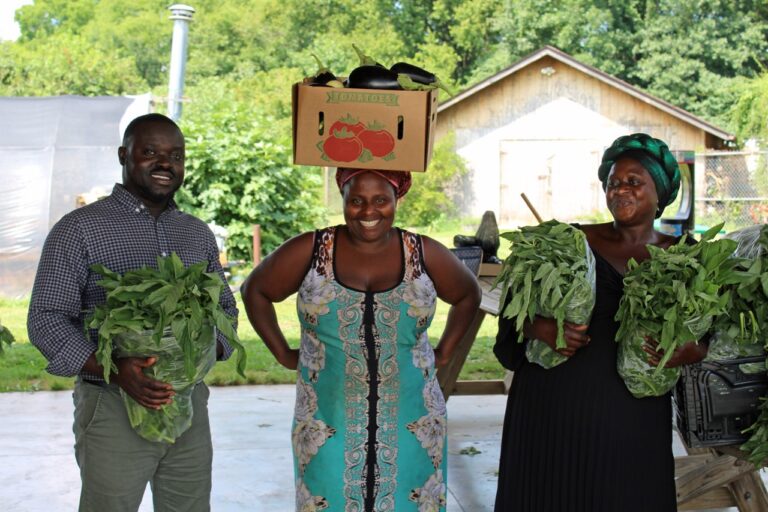
“Our farmers … back home they were farming, so it’s [human] nature for them … they like it,” said Egide, Swahili-English Translator. “The people who receive the produce [are] really happy.” 

IMG 0304 Large 768x512

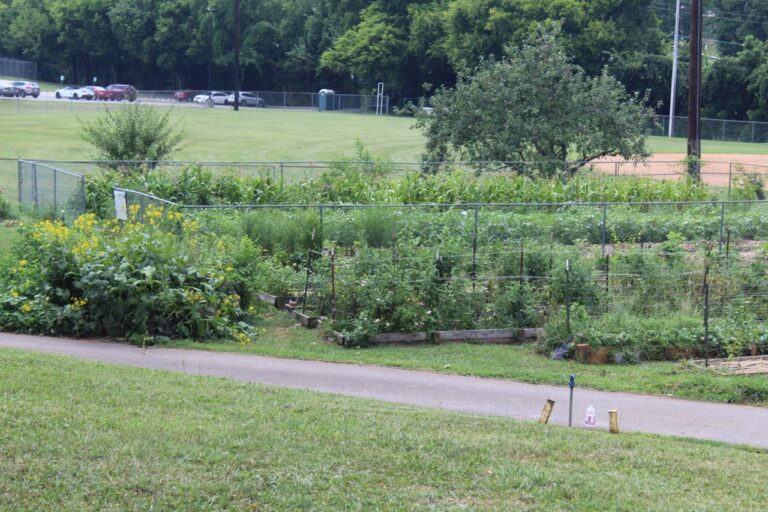
“[The refugee farmers] are growing a lot of food for themselves and their families, and some of them grow extra food, and they sell it amongst each other,” says Charlotte, Director of Urban Agriculture for Beardsley Farm. “There are some gardeners who are interested in taking that to the next step and [selling through the Buy Back program] … I love working with Second Harvest.” 


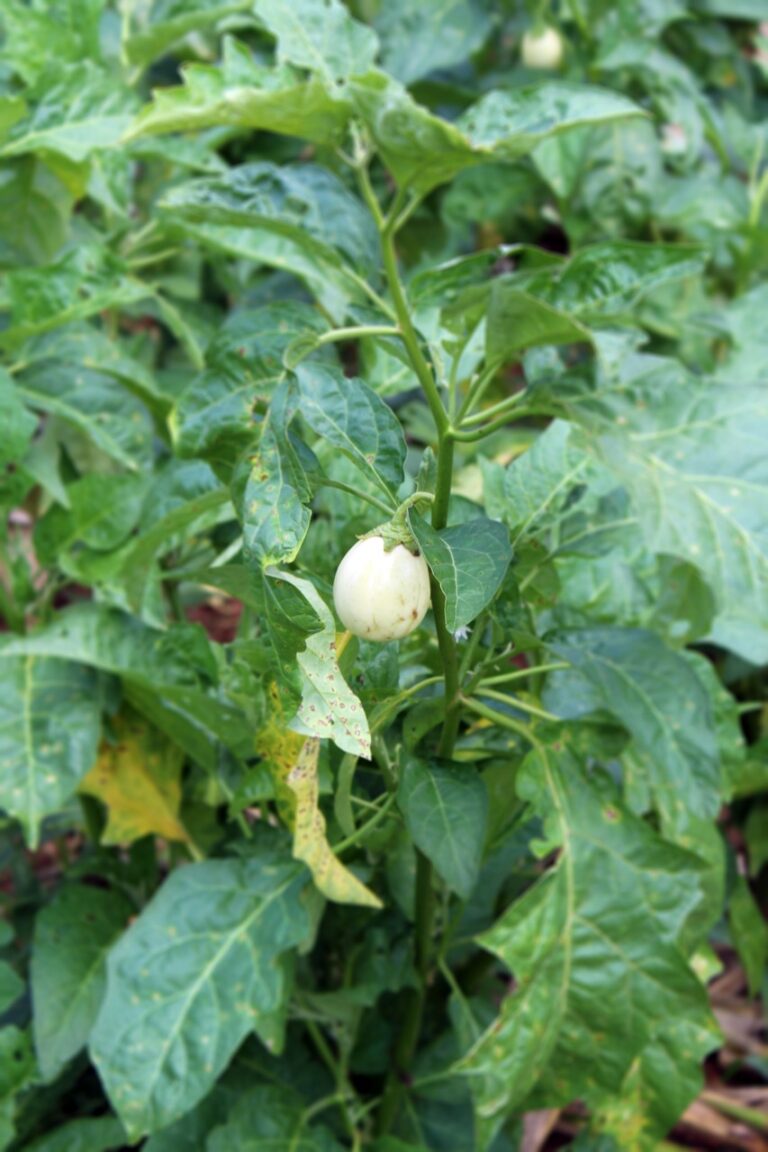
(Charlotte) “On the right is the Buy Back plot. Some of them also grow at their house or at church too. This [is] the intore.” 

IMG 0251 Large 768x1152

(Charlotte) “We’ve had gardeners [at Beardsley Community Farm] since 2011, but we officially started the program in 2016, and it just has grown every year, but we’ve been doing it on not a lot of money. There’s not a dedicated staff person who’s full-time to do it all … We piece together different grants to make it work.” 


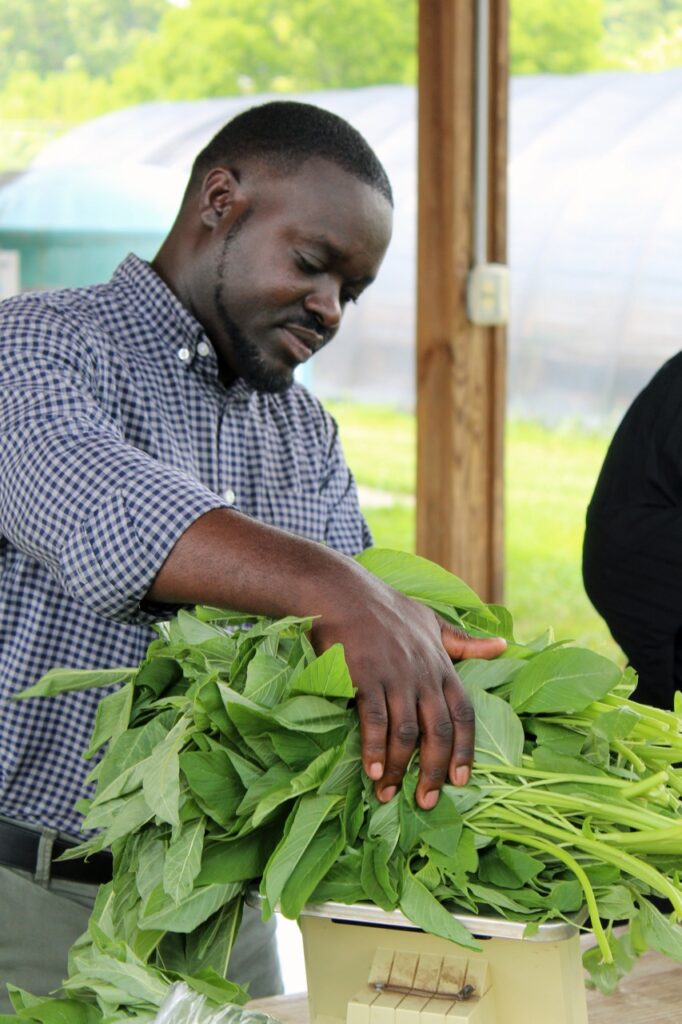
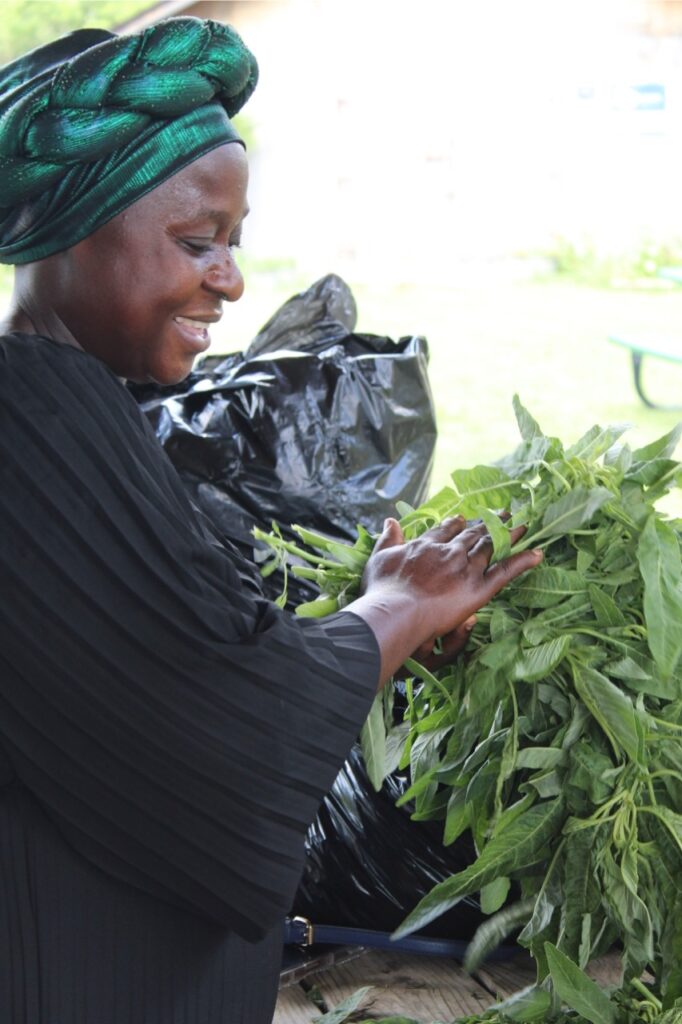
“That’s the lenga-lenga,” said Egide. “We’re gonna pack up a bunch of that today,” said Charlotte. 

IMG 0289 Large 682x1024

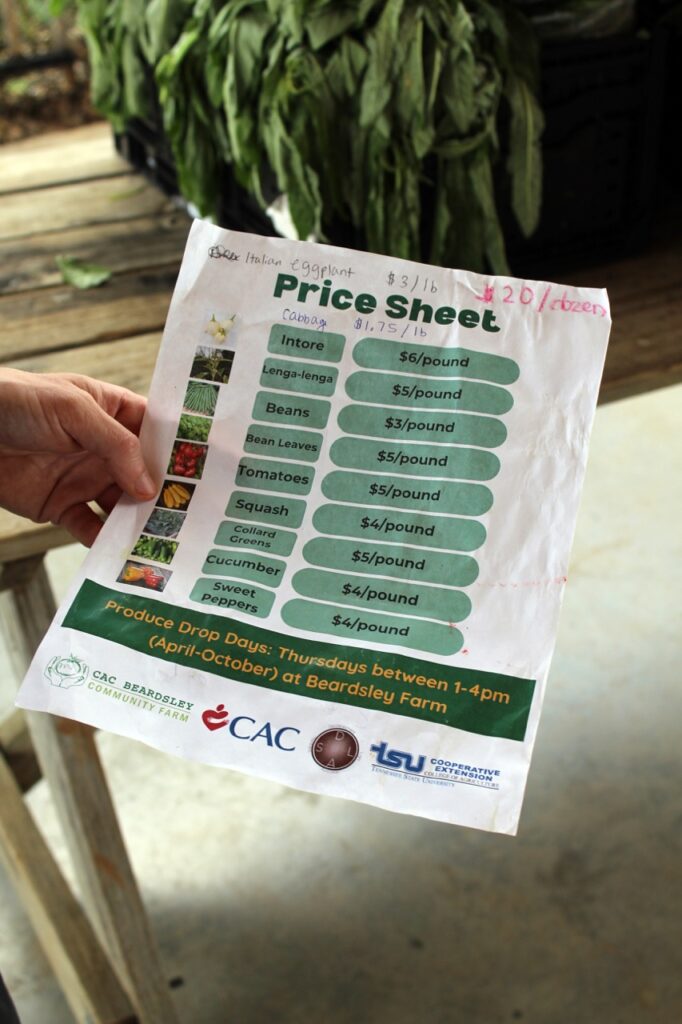
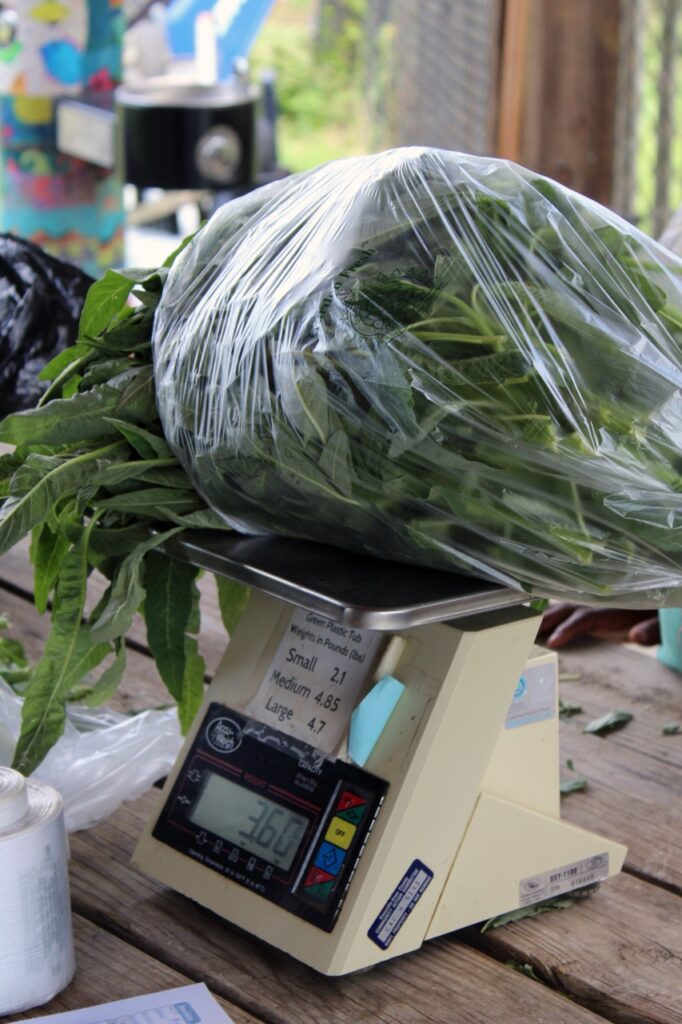
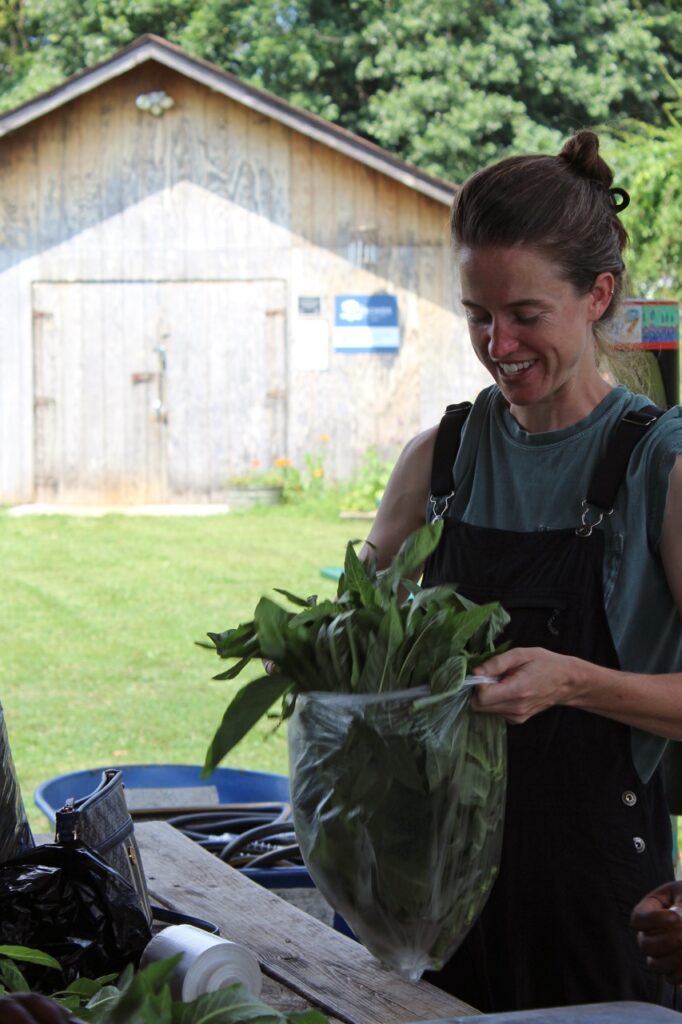
(Charlotte) “[The refugee farmers] have sold $13,000 of produce so far. Josephine sold $1,000 worth of lenga-lenga today. It took us two hours to pack it all. After we get all the produce from [the refugee farmers], we give it to Sodela and they distribute it to the community. This is a list of what they normally sell.” 

IMG 0255 Large 682x1024

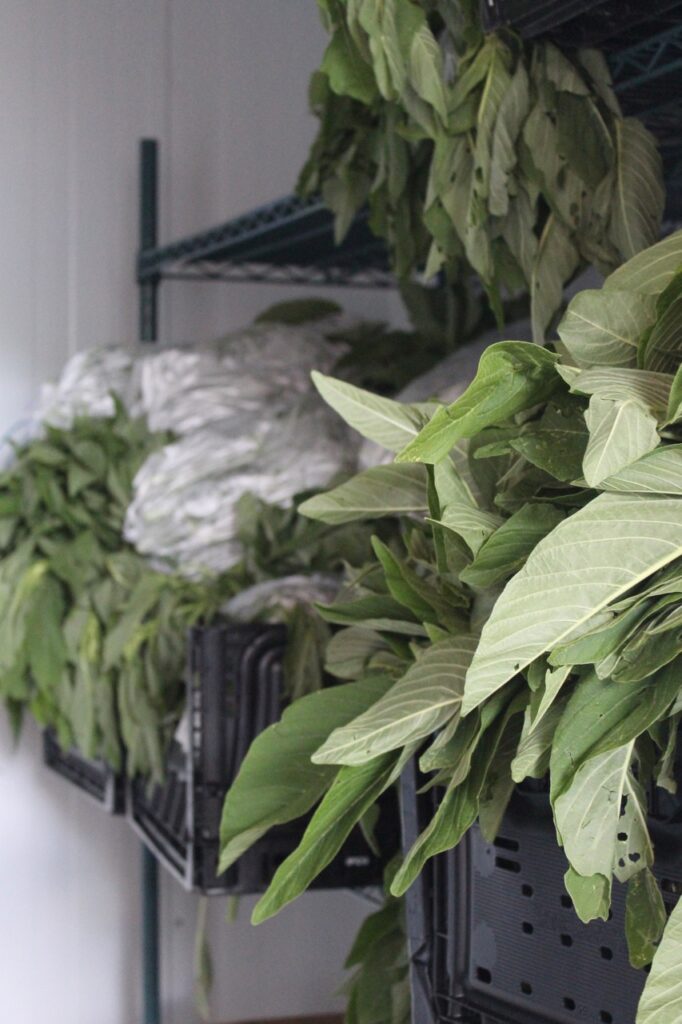
(Charlotte) “Do you want to show her the walk-in? Show her everything you harvested!” 

IMG 0258 Large 682x1024

(Charlotte) “It’s a lot. [We’ll] distribute it all tomorrow… She’s strong! (To the farmers) Will you explain what you do in the process?” 


“After harvesting, we prep them. If they look good, no problem,” said Pamphila, one of the farmers. 


(Pamphila) “We measure by pounds. Lenga-lenga is $5 per pound. We make sure each person receives the same amount.” 

IMG 0281 Large 682x1024

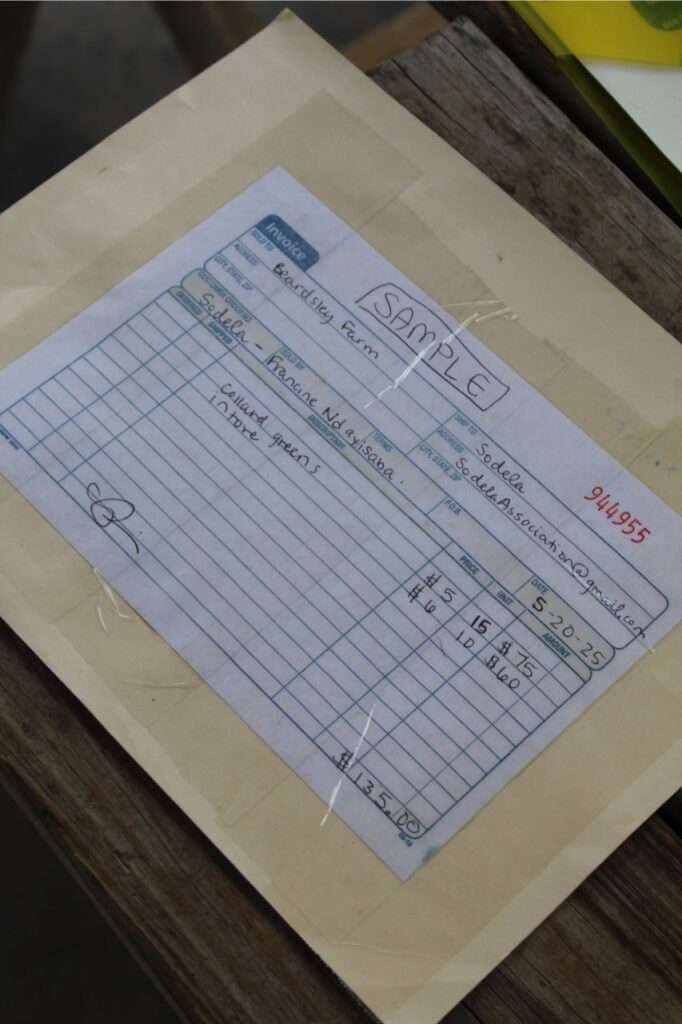
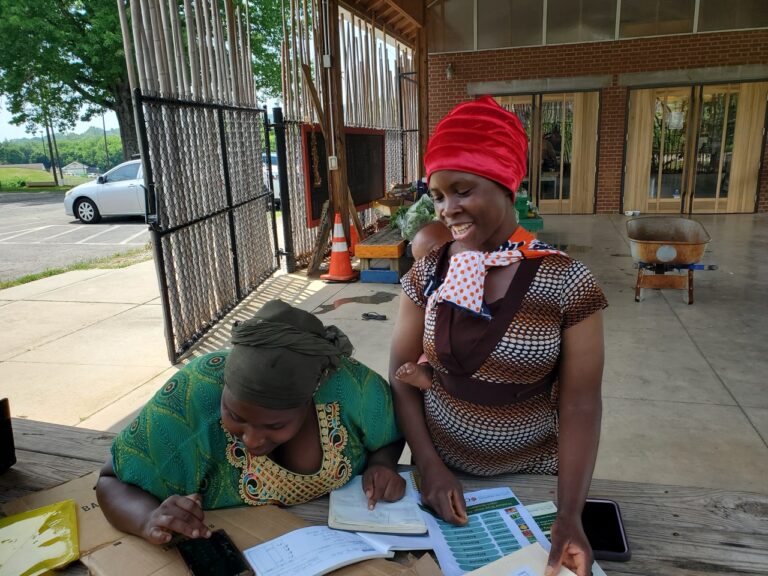
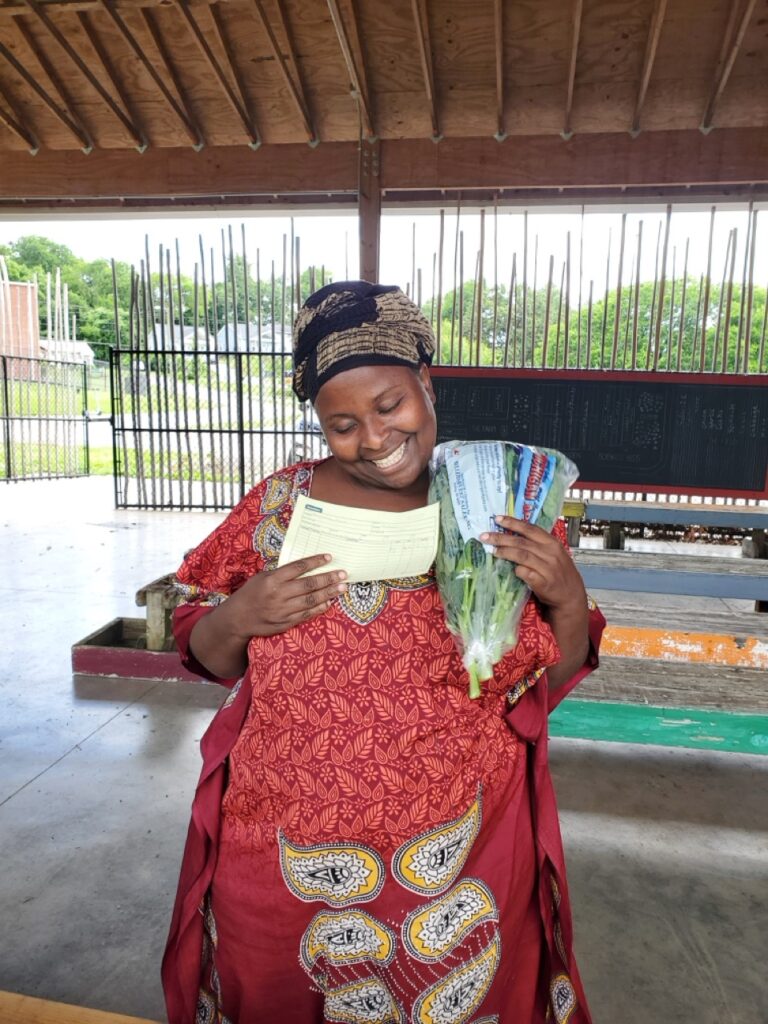
(Charlotte) “We [have] each [of the farmers] fill out their own [invoices].

IMG 0270 Large 682x1024

(Charlotte) “[Lenga-lenga] is related to spinach, but it’s nice because it grows in the heat, and spinach only grows when it’s the perfect temperature in the fall and the spring, but this can grow all summer.” 


(Egide) “The spinach can be put in salad, but [lenga-lenga] has to be cooked.” 


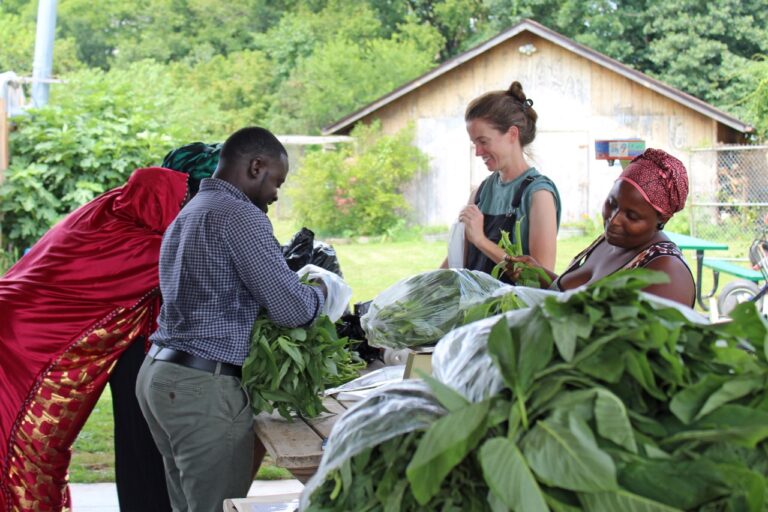
(Charlotte) “[The packing] is also really sweet to watch because [the farmers] bring all their produce around the same time, they coordinate with each other, and then they help each other pack … everybody works together to get it done. [One farmer] brought 500 pounds of cabbage, which is really hard to grow.” 

IMG 0294 Large 768x512

(Pamphila) “[The refugee farmers have enjoyed the Buy Back program] a lot. We [do] appreciate it.” 


(Pamphila) “This program helps happiness. Before, we were planting the food, but now, it’s more than what we used to do. We are happy to be in this program. [One farmer] was sick, then she got better because of the happiness.” 


(To the farmers) What do you do with the extra money, and what does it mean to you? 


Helps me buy stuff [for] my kids,” says Francine, one of the farmers. “It gives me more encouragement to keep going, to not just give up. You feel bad, your body doesn’t want to do [anything], but … it just gives you encouragement to keep going.” 


(Francine) “For me, I just had twins, so I did have some discouragement, to myself, but it opened my eyes to say don’t give up. Even though [you’re] tired, you hurt … you just keep going. Motivation, yes.” 


(Pamphila) “I will use it to prepare [for] the next season … seeds.” 

IMG 0278 Large 682x1024

(To the farmers) Do you have any stories from the Buy Back program you’d like to share? 


(Pamphila) “For me, the story is to tell our kids … farming is good. Kids are learning a lot from it, because when you bring the food home, they eat [it], they say [it] tasted good … they know where the food comes from. Thank you very much for this opportunity you give to us, to think about us, for this program.” 


After the tour, Second Harvest sat down with Charlotte for some additional questions. 


Who are you, and what do you do? 


“I’m Charlotte, the Director of Urban Agriculture for Beardsley Farm. I oversee [the New Ground Garden and Buy Back programs], with the help of Sodela and Francine, and then I do a lot of the daily management, grant writing, outreach … we’re a small nonprofit, so a little bit of everything.” 


How did Beardsley Community Farm get started? 


“Beardsley started in 1998. We’re part of CAC, which is the Community Action Committee, in Knoxville, so we’re one department out of a lot of other departments. Dixie Peatree and Dale Harris are the ones that got together to write the grant that started Beardsley in ‘98. It’s been strongly linked with the Americorps program, and it’s just grown over the years to what it is now.” 


“We have four acres that we’re growing here at Beardsley Farm, so we’re doing a lot of production. Then we have, besides the New Ground Gardens that are off-site, 25 gardens throughout the City of Knoxville that are open to any community member that needs access to land and food.” 

IMG 0243 Large 768x512

“We operate some educational programming, like our School Garden program, and we teach classes all around Knoxville.” 


“We do a big seed and plant distribution every year.” 


“[To] describe the New Ground Garden program in general … We first had gardeners coming to Beardsley in 2011, and then in 2016, we made the program official here. At this point, we have 70 gardeners who grow food on site at Beardsley Farm, and there’s also gardens throughout the city. Some of the gardens are at churches, and some are just empty plots of land that the city has, or on personal property that people lend out.” 


Beardsley Community Farm is both a grower and a distributor to our neighbors, which is still atypical in our food bank model. Can you tell our readers a little bit about how that works? 


“You did a good job of describing how it’s production, and then distribution. We distribute about 100,000 pounds of produce a year. Thanks to Second Harvest, we’re able to have a number that big, because we get a lot of produce through the free program and through the grants that you all provide. That produce goes to KCDC locations, community schools, pantries, [and] our free community fridge that’s on-site.” 


Production, distribution, and education are our three main focuses, and we just have a bunch of different little ways that we do that.” 


How many of our neighbors do you serve per month? 


“In June, we served nearly 12,000 of our neighbors.” 


Are you recruiting volunteers? If so, what positions are available, and how can folks sign up? 


“We have about 1,000 volunteers a year that help us, mainly on the farm, but also with produce distributions and education. People just sign up through our website. 


Tell us more about how the Buy Back program works. 


“The program’s goal is to build upon the incredible growing skills of refugees by offering hands-on training for the skills needed to process, sell, and market produce in Knoxville. Beardsley, Sodela (a non-profit of refugee leaders), Second Harvest Food Bank, and TSU teamed up to make this happen!” 


“Step one of launching the program involved listening sessions and surveys with New Ground gardeners. This helped Beardsley and Sodela determine what resources were needed to support the growing interest in supplementing incomes with produce sales.” 


“Step two involved selecting five growers to pilot the program.” 
20250618 152724 Large 768x576

Photo via CAC Beardsley Community Farm

“Step three began training sessions in the winter of 2024 with lessons taught by TSU agents on business management practices and marketing in both English and Swahili.” 

20250626 144044 1 Large 768x576

Photo via CAC Beardsley Community Farm

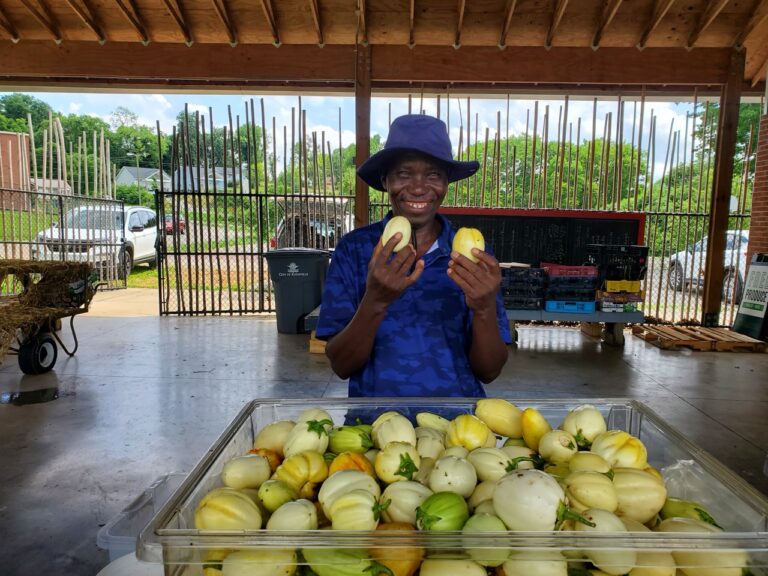
“Step four: farmers began selling their produce in May of 2025! They deliver produce to Beardsley, where invoice training and packaging takes place.” 

20250618 104512 1 Large 768x576

Photo via CAC Beardsley Community Farm

“In step five, farmers get paid for their produce through a grant managed by Second Harvest Food Bank.” 

20250530 150752 1 Large 768x1024

Photo via CAC Beardsley Community Farm

“Step six involves weekly pick-ups by Sodela to deliver the produce from Beardsley to families in need.” 


“To highlight the outcomes of this program, produce has been delivered to around 20 families each month who rely on culturally specific foods as a major part of their diet.” 


Do any favorite stories or memories come to mind from working at Beardsley Community Farm? 


“I’ve been here 10 years, so there’s probably a lot. The essence of Beardsley is community, and I’ve met so many of my good friends. We’ve built a lot of great connections and partnerships because of how much we’re out in the community, so I think that’s my favorite part about Beardsley — how community oriented it is, and not just for myself, but also seeing all the friendships and different relationships that blossom from people meeting through Beardsley. 

IMG 0297 Large 682x1024

What does food access currently look like, for growers and neighbors alike, who rely on culturally specific foods? What resources are available, and what challenges do folks face? 


“Since COVID, the demand for food in general, but also fresh food, is so high because of the rising costs. I think that any access is good, but also there’s a lot of integrity and trust that’s built up when you talk to people and know what it is that they want to eat to keep them healthy. I think people respond [well] to that, and they’ll respect it and come back if you’re treating them with dignity and asking them what they want to eat. We try to do a lot of that, whether it’s with our pantry sites, doing surveys, with the New Ground Garden program, or at our KCDC sites. Each one is so specific and different — each person is so specific and different — and we try our best to accommodate all the different needs there. 


Thank you for taking the time to learn about the work of our community partners. To help Second Harvest continue to support partners like Beardsley, click here. To read more stories like this, click here.